Launch offer — valid today only

📄 Digital book in PDF · read it on your phone or print it

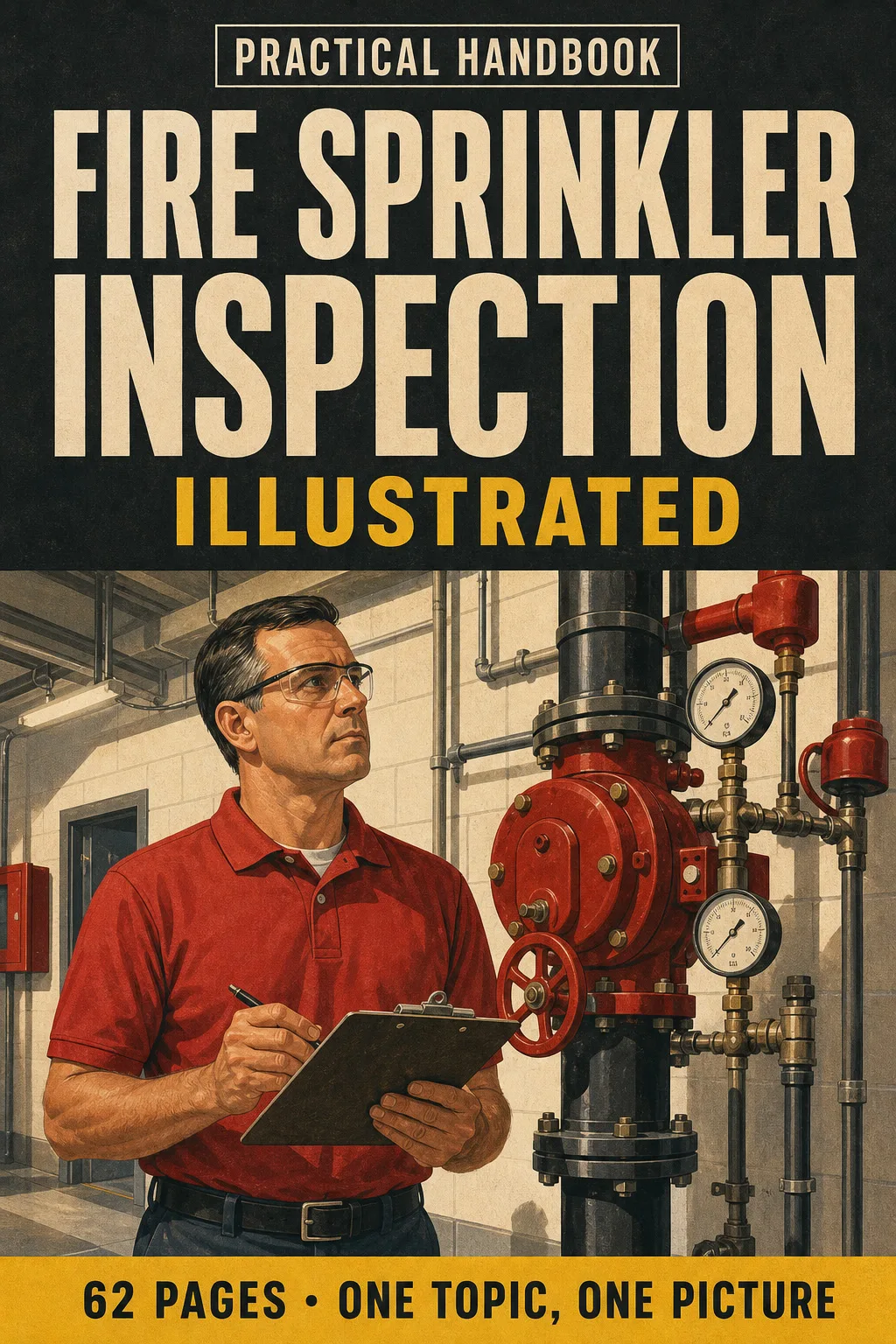
Fire Sprinkler Inspection and NFPA 25 in Drawings Walk Every Riser and Run Every Test in the Same Order

For inspectors and fitters preparing for NICET Water-Based Inspection and Testing, Levels I and II. Wet, dry, preaction and deluge systems, OS&Y and PIV valves, the dry pipe valve, the head and K-factor, the main drain test and the frequency chart. Each topic gets its own page: the drawing first, then what you need to remember. 62 illustrated pages.

GET THE ILLUSTRATED BOOK

🔒 Secure checkout · PDF by email · 30-day guarantee

Every topic, its own pageEach valve and each test drawn, with the explanation right beside it
62 illustrated pages8 parts, from the system at a glance to the field checklist
Up-to-date sourcesNFPA 25 (2023), NFPA 13 and the NICET content outline
PDF by emailFormat

Look Inside the Book

Every page has one big drawing and a box with the numbers and steps you need to know:

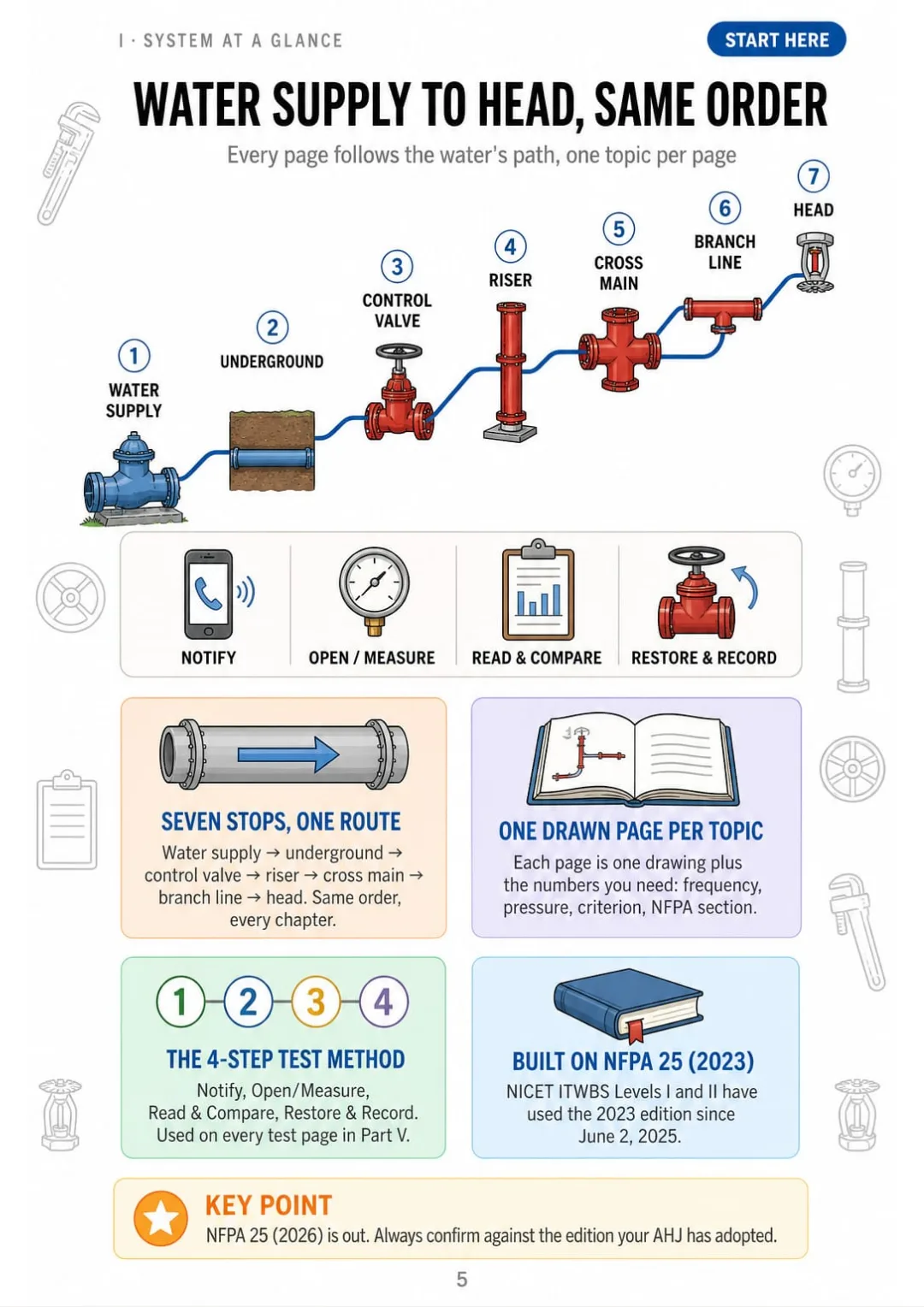
7 stops, always in the same order: water supply to sprinkler head
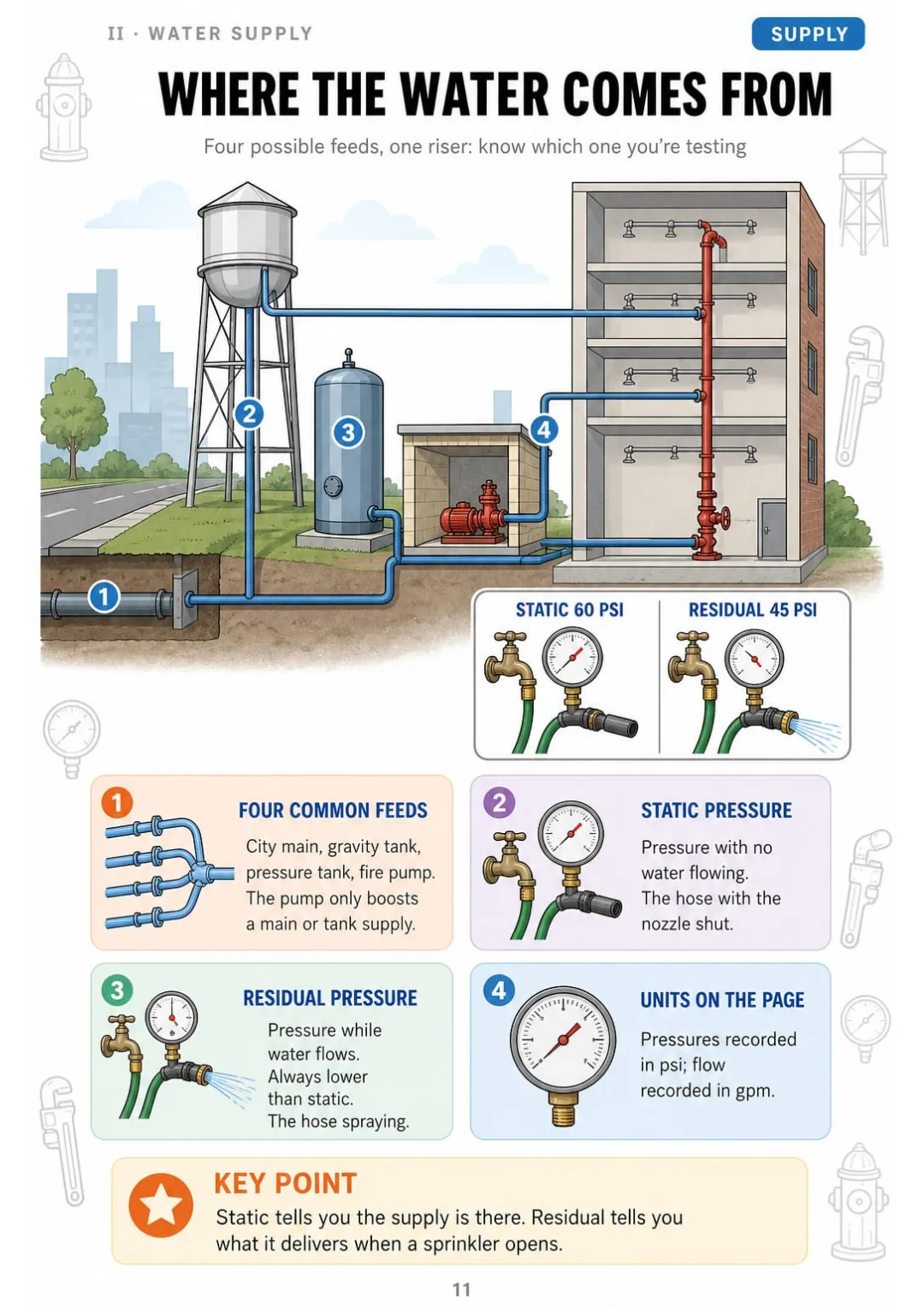
City main, gravity tank, pressure tank or fire pump: four feeds drawn into one riser.
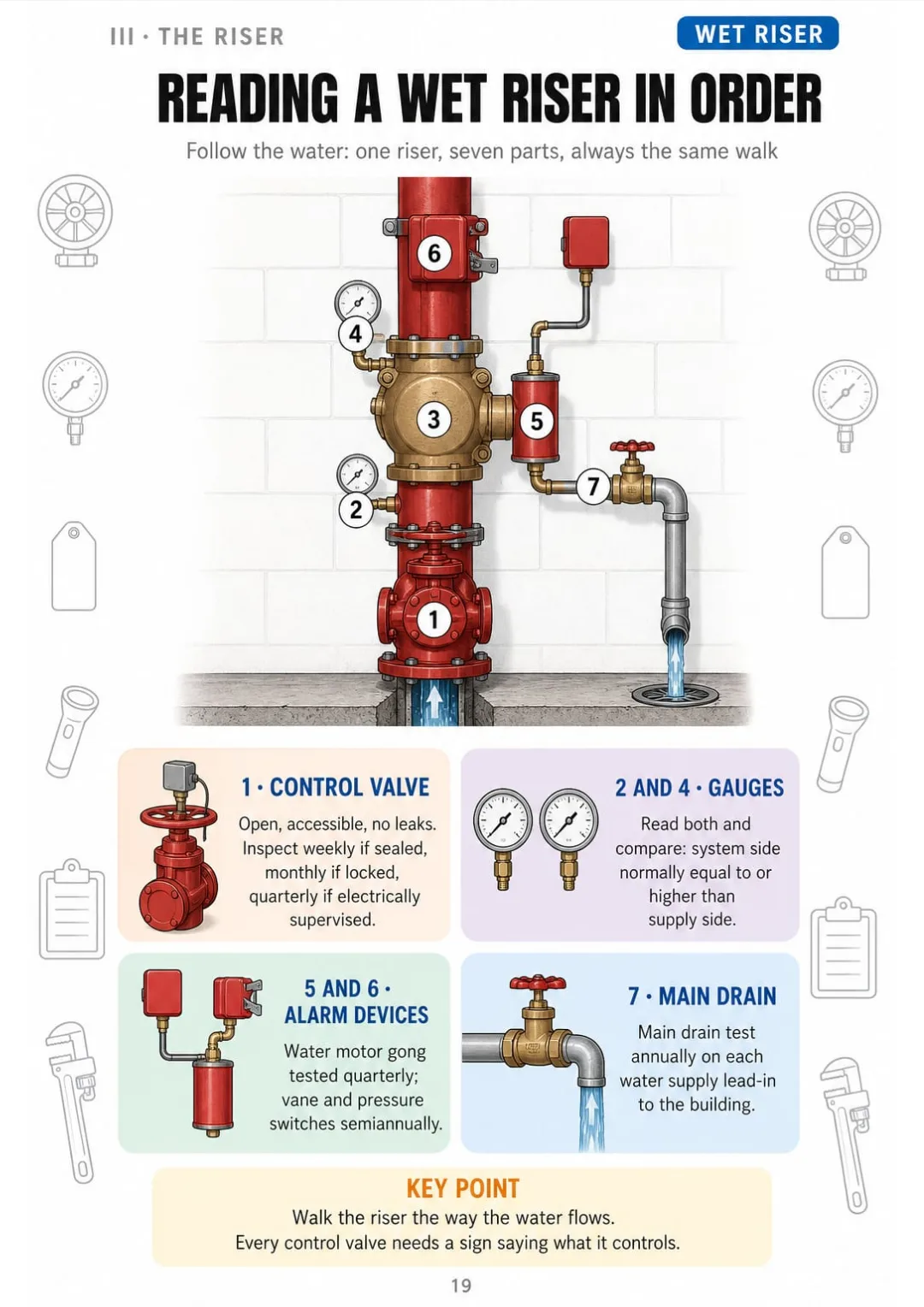
Wet riser in 7 numbered parts: control valve to main drain, in inspection-walk order
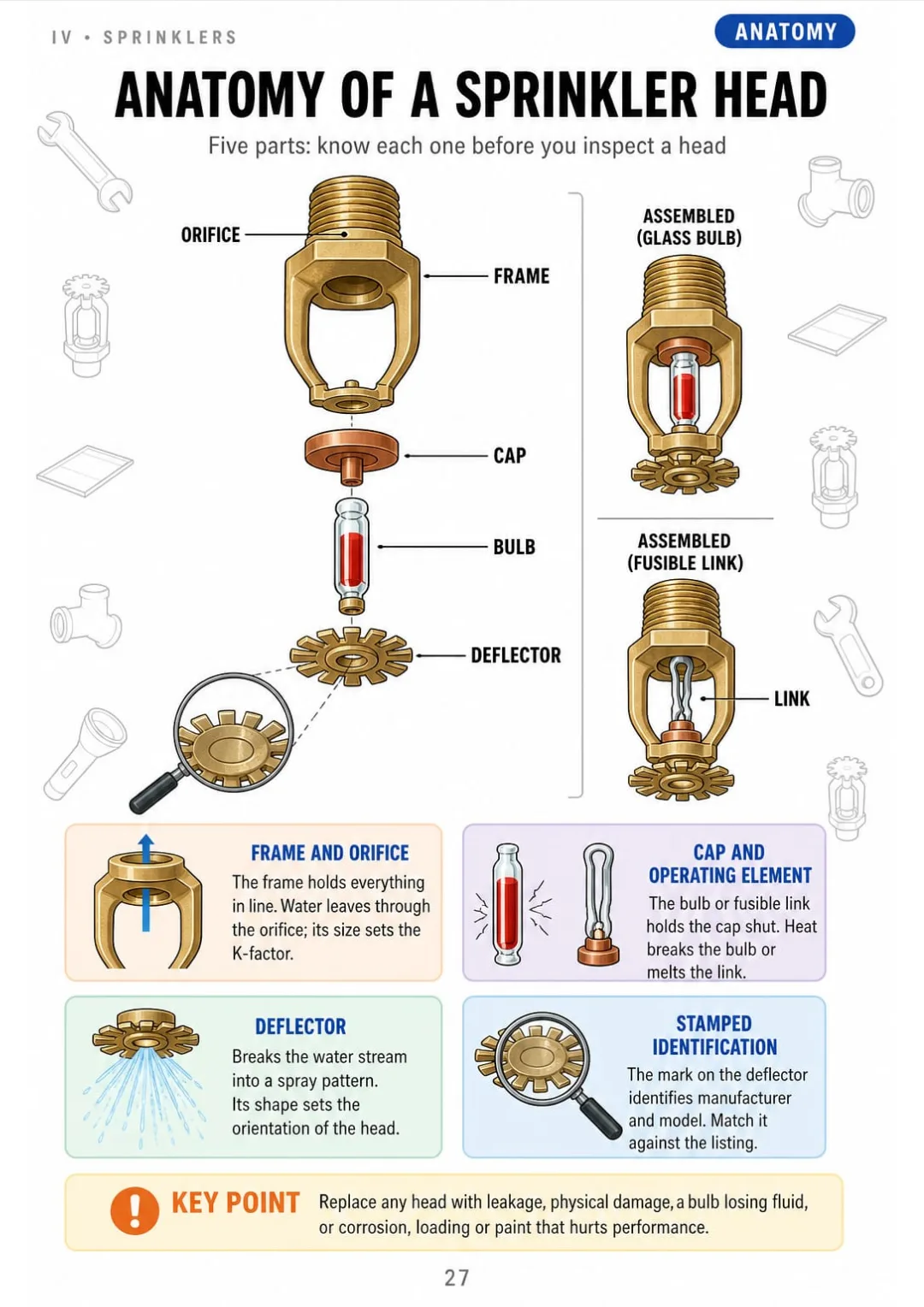
Frame, orifice, cap, bulb or link, deflector: the sprinkler head drawn exploded.
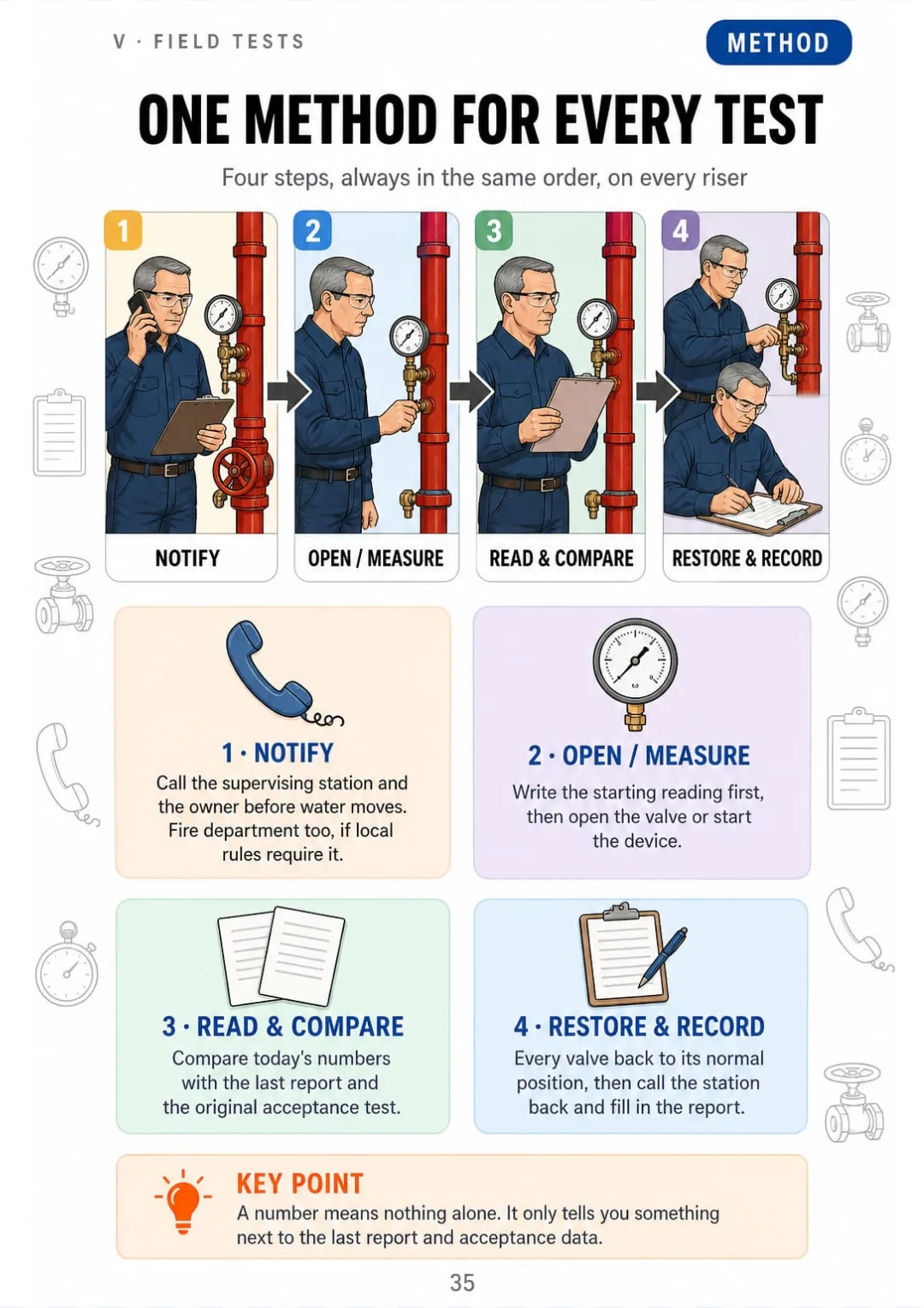
Notify → Open/Measure → Read & Compare → Restore & Record: one drawing for every test
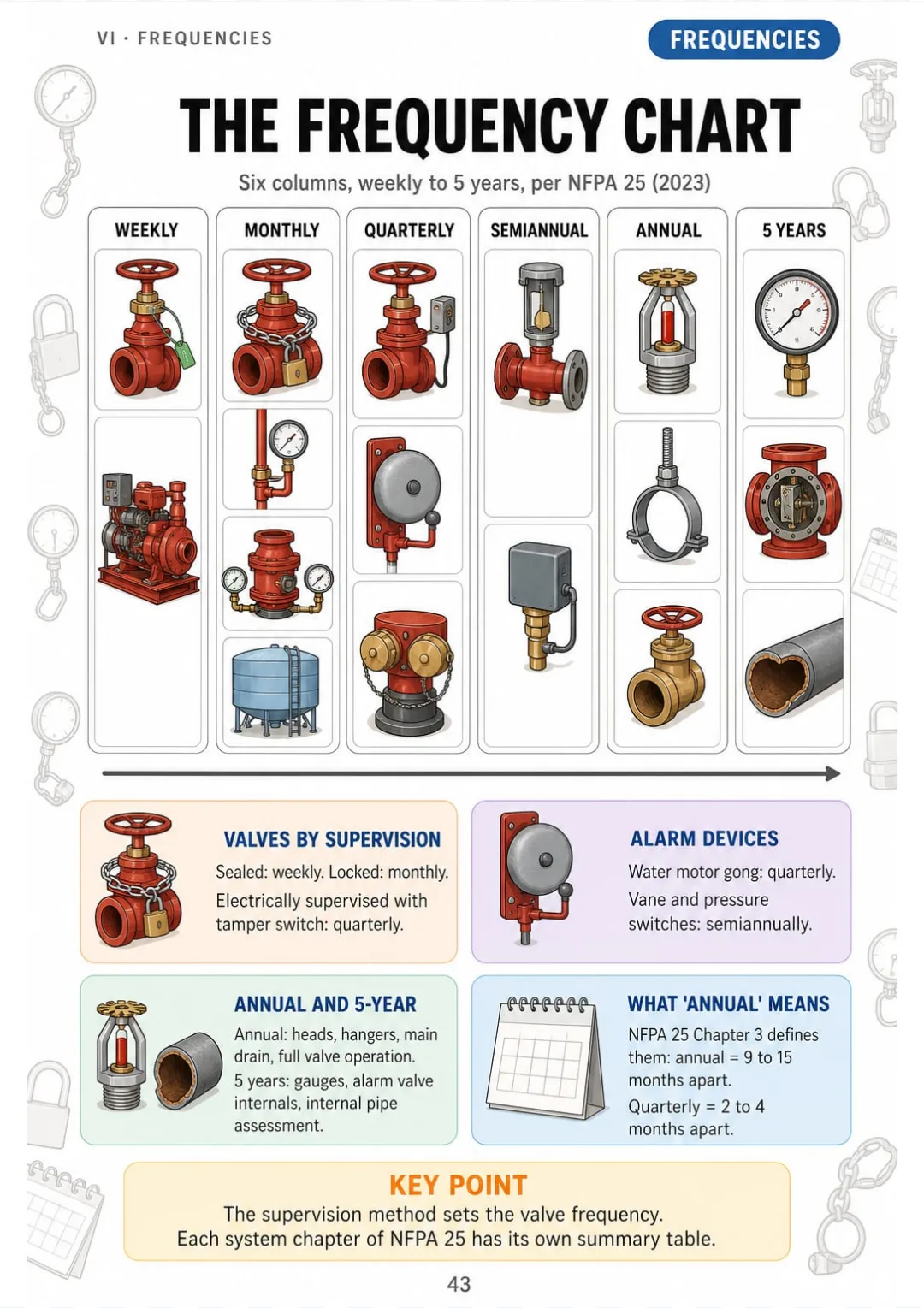
Sealed weekly, locked monthly, tamper switch quarterly: the whole NFPA 25 calendar on one page.
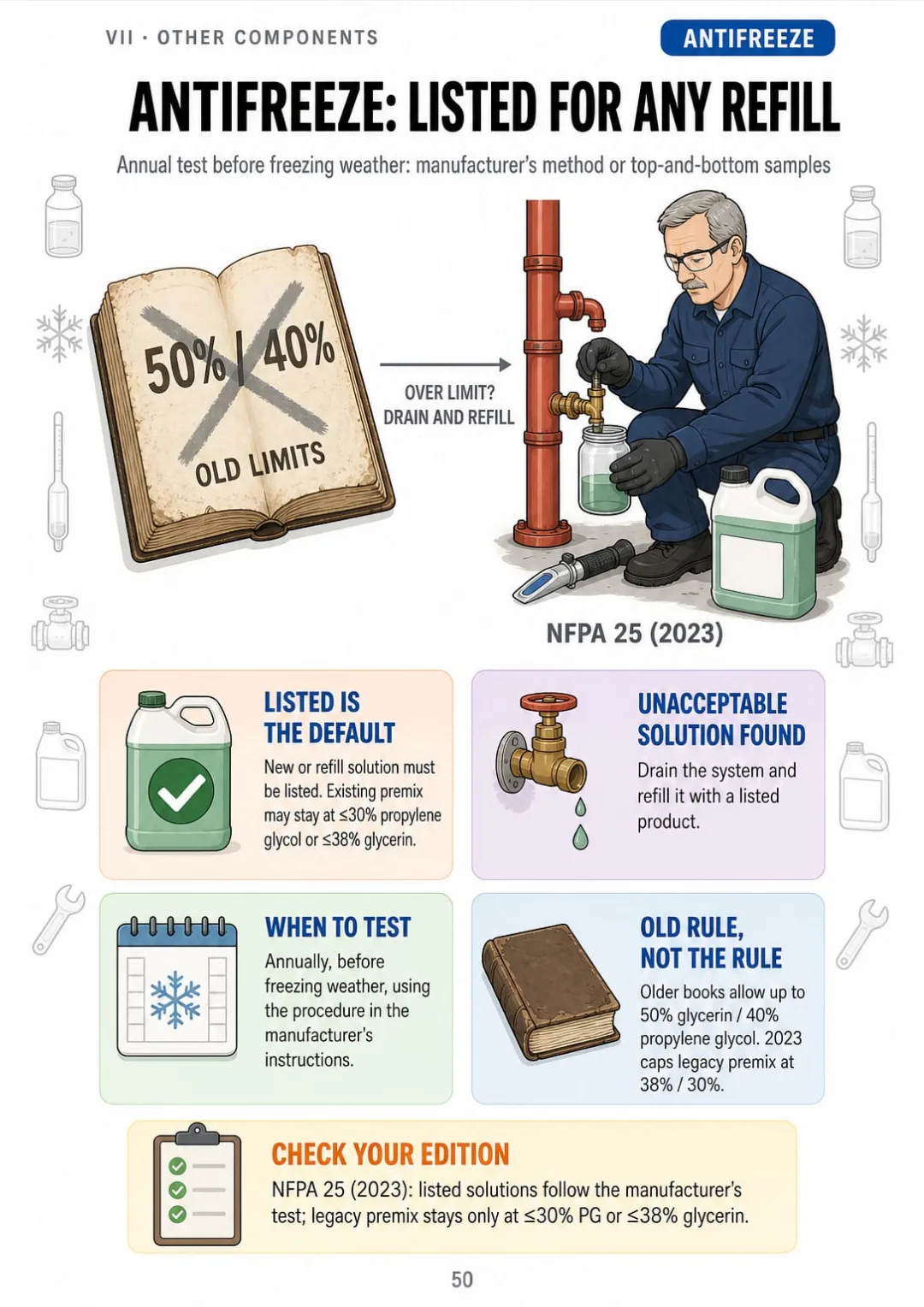
Annual test before freezing weather; refills listed only; legacy premix ≤30% PG / ≤38% glycerin (NFPA 25, 2023)
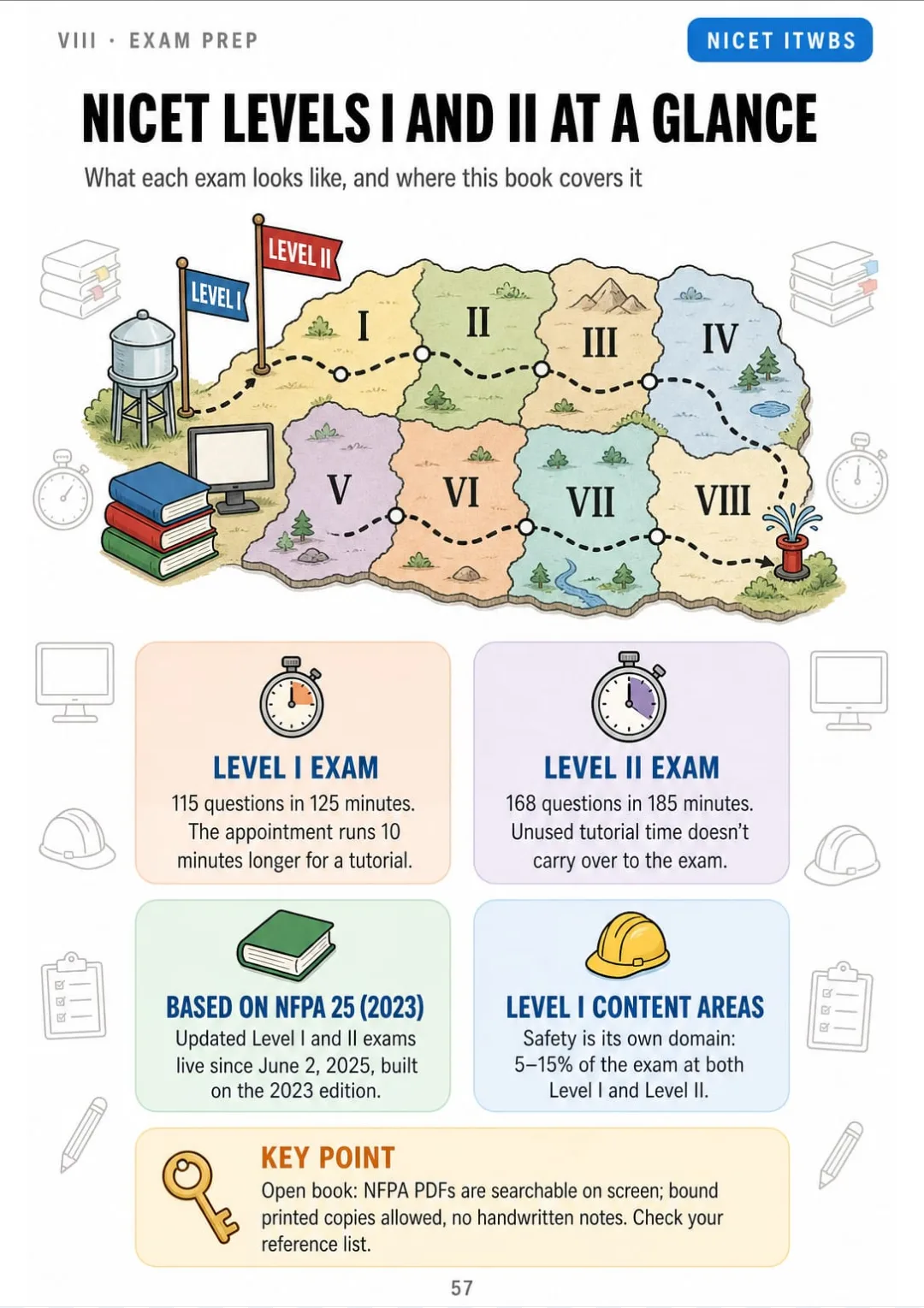
Level I: 115 questions in 125 minutes · Level II: 168 questions in 185 minutes

Swipe to see more →

These are real pages from the book. The table of contents is the full one: 8 parts and 58 topics.

The Problem Isn't You. It's How It Was Explained to You.

You're in the riser room with the building engineer behind you. He asks you to walk him through the wet riser, top to bottom. You've seen a thousand of them, but the words come out in the wrong order.

That's not a gap in what you know. The manual describes the riser in paragraphs: control valve, check valve, gauges, alarm device, main drain, all in running text with no picture tying them together.

Wet riser in 7 numbered parts: control valve to main drain, in inspection-walk order

In this book the wet riser is one page. Seven numbered parts, drawn in the order you walk it, from the control valve down to the main drain, with each gauge where it actually sits.

The rest works the same way: the dry pipe valve, the OS&Y, the sprinkler head drawn exploded, the main drain test and the frequency chart. Each one has its own page.

Next time someone asks, you walk the riser in order and explain every part without opening the code book.

COMPARE FOR YOURSELF

The Same Topic, Two Ways to Study It

THIS
  • The manual: line after line after line
  • Water supplies explained with words only
  • You can name the four sources, not how they feed the riser
Water supplies for automatic sprinkler systems may consist of one or more sources, including connections to public waterworks systems, gravity tanks, pressure tanks and fire pumps taking suction from an approved source. Where a connection to a public water main is provided, the supply is to be evaluated for adequate pressure and flow under the anticipated system demand. Pressure tanks are maintained at the required air pressure and water level, while gravity tanks depend on elevation to establish the available head at the system riser.
FOR THIS
  • Four water supplies in one drawing
  • Each feed labeled in a box
  • City main, tanks and pump drawn into the same riser
City main, gravity tank, pressure tank or fire pump: four feeds drawn into one riser.
CONTENTS

Take a Look at the 8 Parts and 58 Topics

The system at a glance, water supply and control valves, the riser, the sprinkler head, field tests, frequencies and reporting, other water-based components and exam prep: 62 pages, all illustrated.

IThe System at a Glance · pp. 5-10
  1. How to Use This Book: Water Supply to Head, Always in the Same Order
  2. Inspect, Test, Maintain: Three Different Jobs
  3. The Whole Sprinkler System in One Drawing
  4. Wet, Dry, Preaction, Deluge, Antifreeze: Side by Side
  5. Preaction: Single, Double and Non-Interlock
  6. Hazard Classification: Why the Occupancy Changes the Design
IIWater Supply and Control Valves · pp. 11-18
  1. Where the Water Comes From
  2. Static, Residual and Flow: The Three Numbers
  3. OS&Y Valve: Stem Out Means Open
  4. PIV, Wall PIV and Butterfly Valves
  5. Control Valve Supervision: Sealed, Locked or Electrically Supervised
  6. Operating Control Valves: Full Range and Back
  7. Backflow Preventers on the Fire Line
  8. Fire Department Connection: What the Engine Needs
IIIThe Riser and Its Valves · pp. 19-26
  1. Reading a Riser Top to Bottom
  2. Gauges: Above and Below the Clapper
  3. Alarm Check Valve: How It Rings the Bell
  4. Waterflow Alarm Devices: Vane, Pressure Switch, Water Motor Gong
  5. Dry Pipe Valve: Air Holds Back Water
  6. Quick-Opening Devices: Accelerator and Exhauster
  7. Dry Valve Enclosure and Low Points
  8. Deluge and Preaction Valve Trim
IVSprinklers: The Head · pp. 27-34
  1. Anatomy of a Sprinkler Head
  2. Pendent, Upright, Sidewall, Concealed
  3. Glass Bulb Colors and Temperature Ratings
  4. K-Factor: Q = K√P
  5. Standard Response, Quick Response, ESFR, Residential
  6. Annual Sprinkler Inspection from the Floor
  7. Sprinkler Testing by Age
  8. The Spare Sprinkler Cabinet
VField Tests in 4 Steps · pp. 35-42
  1. The 4-Step Method for Every Test
  2. Main Drain Test, Step by Step
  3. Main Drain Results: When a Drop Means Trouble
  4. Inspector's Test Connection, Step by Step
  5. Waterflow Alarm Test: Timing the Signal
  6. Dry Pipe Trip Test: Partial and Full Flow
  7. Resetting a Dry Pipe Valve
  8. Fire Pump Churn Test: What to Read
VIFrequencies and Reporting · pp. 43-49
  1. The Frequency Chart: Weekly to 5 Years
  2. Weekly and Monthly: The Owner's Rounds
  3. Quarterly and Annual: The Inspector's Visit
  4. Five-Year Items and Internal Pipe Assessment
  5. Deficiency, Critical Deficiency, Impairment
  6. Impairments: Tags, Notifications, Fire Watch
  7. Writing the Report: What to Record
VIIOther Water-Based Components · pp. 50-56
  1. Antifreeze Systems: Testing the Solution
  2. Hangers, Seismic Bracing and Pipe Condition
  3. Signs, Placards and Valve Identification
  4. Reading the Hydraulic Placard
  5. Water Storage Tanks
  6. Standpipes and Hose Connections
  7. Private Hydrants and Underground Mains
VIIIExam Prep and Field Checklist · pp. 57-62
  1. NICET Water-Based Systems I and II: What Each Level Covers
  2. How to Find the Answer Fast in NFPA 25
  3. Numbers Worth Knowing Cold
  4. Mix-Ups That Cost Points
  5. Most Frequent Field Mistakes
  6. Building Walk-Through Checklist

One Page, One Topic, All Clear

Think of it this way:

You're on an annual inspection and the main drain reading comes in lower than last year. The owner is standing there, waiting for you to say whether it's a problem.

In the book you open the main drain page and it's drawn out: the gauge, the static reading, the residual and the 4 steps in order, plus the line that matters: a 10% drop in full-flow pressure against earlier tests means you find the cause, starting with a partly closed valve.

Notify → Open/Measure → Read & Compare → Restore & Record: one drawing for every test

Same with the dry pipe valve, the OS&Y, glass bulb colors, the frequency chart and impairments. Each topic, its own page.

Fire Sprinkler Inspection Illustrated is 8 parts and 58 topics, all drawn, with an exam prep section and a building walk-through checklist at the end.

What you see drawn, you don't have to memorize.

What's Inside Fire Sprinkler Inspection Illustrated:

Ipp. 5-10

The System at a Glance

How to use the book, inspect vs. test vs. maintain, the whole system in one drawing, the five system types side by side, preaction interlocks and hazard classification.

IIpp. 11-18

Water Supply and Control Valves

Water sources, static, residual and flow, OS&Y, PIV and butterfly valves, valve supervision, operating valves, backflow preventers and the FDC.

IIIpp. 19-26

The Riser and Its Valves

The riser top to bottom, gauges above and below the clapper, alarm check valve, waterflow alarms, dry pipe valve, accelerators and exhausters, low points and deluge/preaction trim.

IVpp. 27-34

Sprinklers: The Head

Head anatomy, pendent, upright, sidewall and concealed, bulb colors and temperature ratings, K-factor, response types, the annual floor inspection, testing by age and the spare head cabinet.

Vpp. 35-42

Field Tests in 4 Steps

The 4-step method, main drain test and results, inspector's test connection, waterflow alarm timing, dry pipe trip test and reset, and the fire pump churn test.

VIpp. 43-49

Frequencies and Reporting

Know what's due and when without flipping through tables: the frequency chart from weekly to 5 years, the owner's rounds vs. the inspector's visit, 5-year items, deficiencies vs. impairments, fire watch and a report that comes out complete.

VIIpp. 50-56

Other Water-Based Components

Antifreeze testing, hangers and seismic bracing, signs and the hydraulic placard, water storage tanks, standpipes, private hydrants and underground mains.

VIIIpp. 57-62

Exam Prep and Field Checklist

What NICET Levels I and II cover, finding answers fast in NFPA 25, numbers worth knowing cold, common mix-ups, frequent field mistakes and a walk-through checklist.

At the end of the book: A 4-step method for every field test, the full frequency chart and a building walk-through checklist.
Plus: 2 Free Books

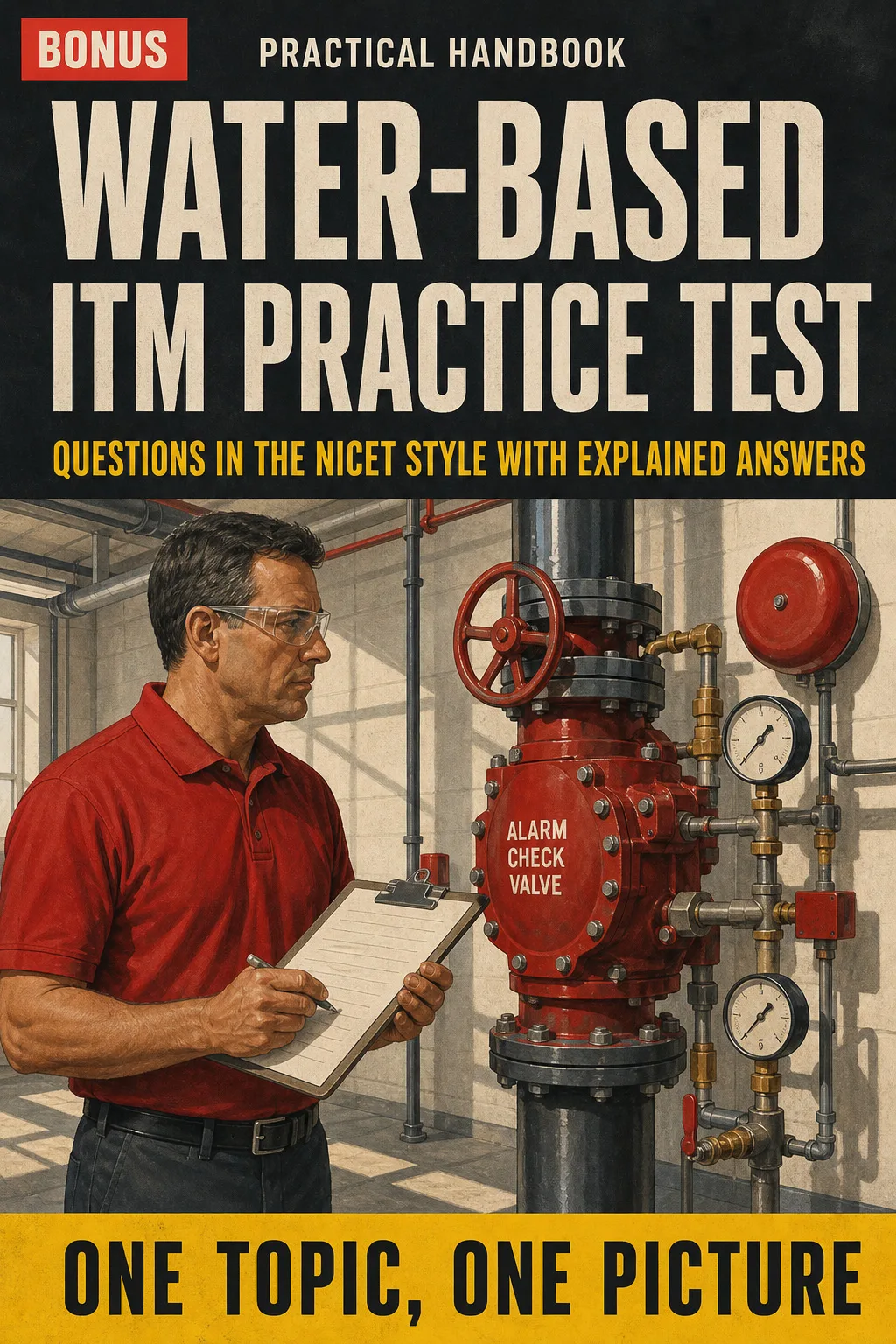
Water-Based ITM Practice Test: Questions in the NICET Style with Explained Answers

BONUS 1: «Water-Based ITM Practice Test: Questions in the NICET Style with Explained Answers»

Value on its own: US$ 17.90

Practice the kind of questions the exam asks and see why each answer is right, page reference included, so you find your weak spots before test day.

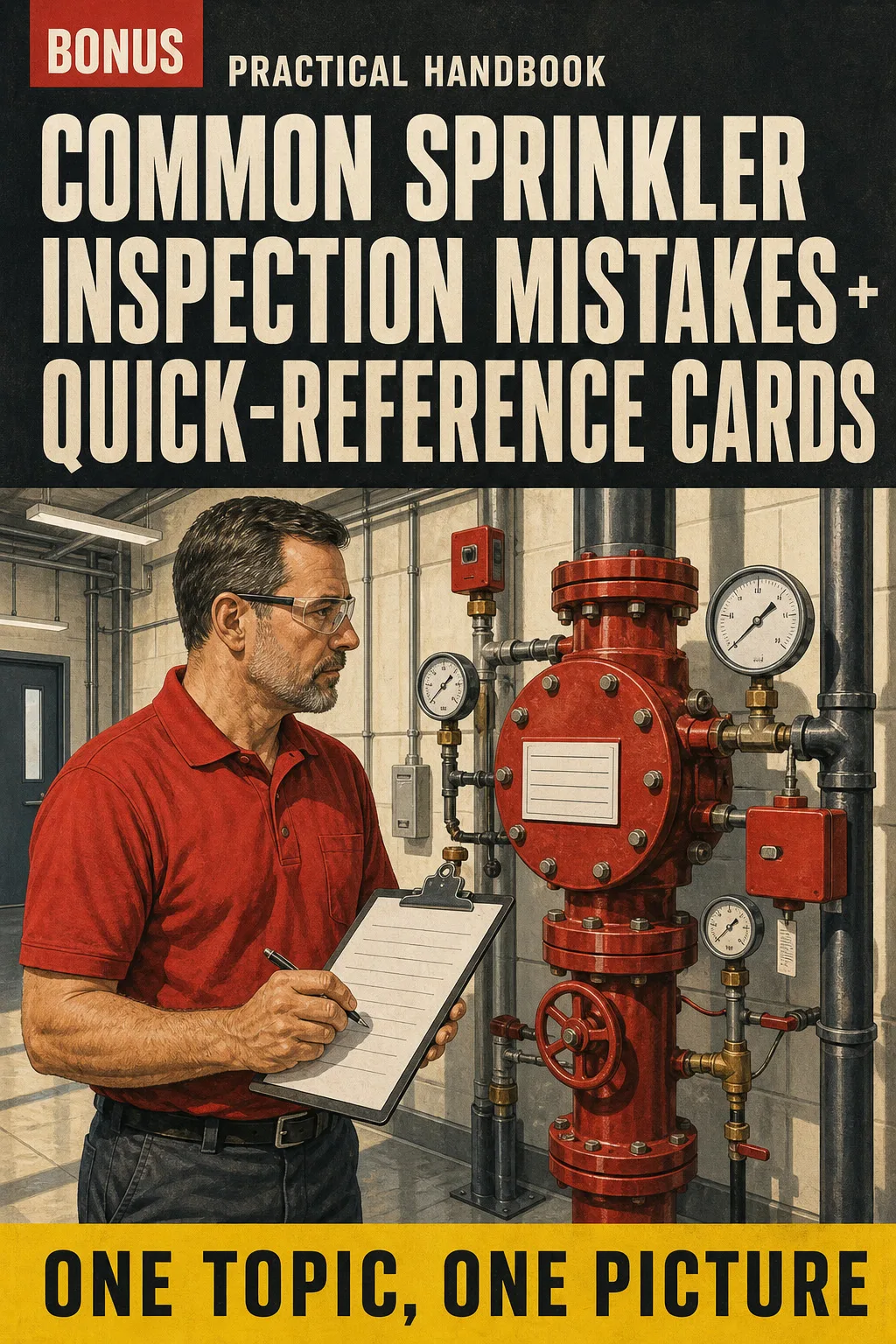
Common Sprinkler Inspection Mistakes + Quick-Reference Cards

BONUS 2: «Common Sprinkler Inspection Mistakes + Quick-Reference Cards»

Value on its own: US$ 14.90

The most frequent field mistakes (closed valves left unsupervised, wrong bulb color, missed drain readings) and one-card summaries to review in five minutes in the truck.

Fire Sprinkler Inspection Illustrated with 2 Free Books

  • Fire Sprinkler Inspection Illustrated: 62 illustrated pagesUS$ 63
  • BONUS 1: Water-Based ITM Practice Test: Questions in the NICET Style with Explained AnswersUS$ 17.90
  • BONUS 2: Common Sprinkler Inspection Mistakes + Quick-Reference CardsUS$ 14.90
  • High-resolution PDF to printIncluded
Total value US$ 95.80
YOUR PRICE:
US$ 27
You save US$ 68.80
YES, I WANT FIRE SPRINKLER INSPECTION ILLUSTRATED FOR US$ 27

📄 This is a digital PDF book sent to your email: nothing is printed or shipped.

Secure purchaseEncrypted payment30-day guarantee

PDF by email: We email you Fire Sprinkler Inspection Illustrated as a PDF, together with the two free books. It's a single payment: no installments, no extra charges.

Who This Book Is For

You're moving from fitter to inspector

You're moving from fitter to inspector

You know the pipe. The book puts the testing side in order: every valve, every test and every frequency on its own page.

Your NICET exam is coming up

Your NICET exam is coming up

Frequencies in one chart, the numbers worth knowing and the common mix-ups, ready to review in the weeks before test day.

You already sign inspection reports

You already sign inspection reports

A printed reference for the truck: each test in the same 4 steps and what to record, so every report comes out complete.

Everything You Get Today

US$ 95.80US$ 27
YES, I WANT FIRE SPRINKLER INSPECTION ILLUSTRATED FOR US$ 27

📄 This is a digital PDF book sent to your email: nothing is printed or shipped.

30DAYS
GUARANTEE

30-Day Guarantee

Try Fire Sprinkler Inspection Illustrated for 30 days, bonus books included.

We refund everything if the file won't open, if the book isn't what you see here, if you were charged twice or if the email doesn't arrive. Just email us.

You pay once. No subscriptions.

Frequently Asked Questions

Is it for me if I already work in fire protection and need NICET?

Yes. It's not a beginner's book about pipe: it puts inspection and testing in order, from the water supply to the head, the way you'd walk a building.

Where does the content come from?

It's checked topic by topic against NFPA 25 (2023 edition) and NFPA 13, and cross-referenced to the NICET content outline for Inspection and Testing of Water-Based Systems. Many states and AHJs still enforce an earlier edition, and some frequencies changed between editions. Before your exam, check the editions on NICET's reference list; in the field, follow the edition your AHJ has adopted.

Is this official material?

No. It's independent study material, not published by or affiliated with NFPA or NICET, and it doesn't reproduce the standard. It doesn't give you a certificate or count toward certification: that only comes from passing NICET's exam and meeting its work experience requirements.

Does it replace a course or buying NFPA 25?

No. It doesn't replace training, field experience or the standard itself. It helps you understand and review what's in them.

Are the practice questions the real exam questions?

No. They're written for this book in the style of the exam, with explained answers. They're not official NICET questions.

When and how do I get it?

The book and the 2 bonus books come as PDFs by email, to the address you enter at checkout.

Do I have to pay every month?

No. It's a one-time payment, with no subscription.

Can I have it on paper?

Yes. The PDF is made to print, so you can keep a copy in the truck.

How does the refund work?

You have 30 days. We refund everything if the file won't open, if the book isn't what you see on this page, if you were charged twice or if the email doesn't arrive: just email us.

Before You Close This Page

No more rereading NFPA 25 with nothing sticking.

The wet riser? It's drawn out for you, part by part.

You walk into the exam knowing where everything is.

Drawings make studying faster.

The book is right below.

One-time payment: US$ 27 · Guarantee: 30 days · PDF by email

YES, I WANT FIRE SPRINKLER INSPECTION ILLUSTRATED FOR US$ 27

📄 This is a digital PDF book sent to your email: nothing is printed or shipped.